Is a Montessori Preschool in Singapore Right for Your Child?

Important Insights
- Children in a Montessori setting choose their own activities, fostering a sense of independence and personal responsibility.
- Grouping children of different ages together allows younger students to learn from older peers while older children develop leadership skills.
- Specialised materials help children grasp abstract concepts such as mathematics and phonics through physical touch and exploration.
Introduction
Selecting the first school for your child feels like one of the weightiest decisions you will make as a parent, where two choices fall between a standard kindergarten and a more specialised Montessori preschool in Singapore. Every child possesses a unique temperament; some thrive with clear, teacher-led instructions, while others seem to bloom when they have the freedom to follow their own curiosity. You can visualise where your child will feel most confident when you understand the reality of these teaching styles. This choice sets the tone for their entire relationship with education, turning those early years into a period of genuine discovery. By matching the school’s philosophy to your child’s personality, you provide them with the best possible start for the long road ahead.
1. Encouraging Independence Through Self-Directed Play
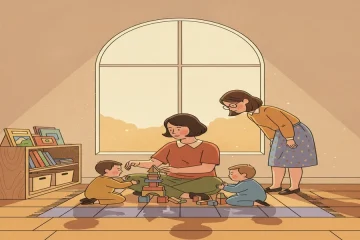
In a Montessori preschool in Singapore, you will notice a distinct lack of rows of desks or a teacher standing at the front of the room. Instead, children move freely between different work stations, choosing tasks that capture their interest at that specific moment. This approach teaches them to trust their own instincts and take ownership of their learning from a very young age. You might see a three-year-old carefully pouring water into a glass or an older child working with complex wooden blocks to understand geometry. Unlike a more rigid kindergarten in Singapore, this style allows a child to spend as much time as they need on a single task until they master it. This lack of a ticking clock reduces the pressure on the child, allowing them to develop a deep sense of concentration.
2. Learning Through Multi-Age Social Groups
One of the most recognisable features of this educational style is the grouping of children into three-year age bands. You might worry that your younger child will feel overwhelmed, but the opposite often happens in a Montessori preschool in Singapore. Younger students watch their older classmates tackle more advanced projects, which naturally sparks a desire to learn and progress. Meanwhile, the older children gain immense confidence by acting as mentors and helpers to the little ones. This social dynamic mirrors real life much more closely than the age-segregated classrooms found in a traditional kindergarten in Singapore.
3. Mastering Concepts with Hands-On Materials
If your child constantly wants to touch everything in sight, they might benefit from the tactile nature of a Montessori preschool in Singapore. Every item in the classroom serves a specific purpose, designed to help children feel the weight, texture, and shape of the ideas they are learning. For example, instead of just looking at numbers on a whiteboard, they might use sandpaper numbers to trace the shape of a digit with their fingers. This physical connection helps the brain retain information much more effectively than listening to a lecture in a standard kindergarten in Singapore. These materials transform abstract subjects into a series of satisfying physical puzzles that children genuinely enjoy solving.
4. Developing Life Skills Beyond Academics
While literacy and numeracy are important, many parents seek a school that also teaches practical life skills. In a Montessori preschool in Singapore, children learn how to prepare their own snacks, tidy up their workspaces, and even care for indoor plants. These activities build fine motor skills and a sense of pride in their ability to contribute to the classroom community. You might find your child becoming more helpful at home, suddenly wanting to assist with setting the table or putting away their toys. A traditional kindergarten in Singapore often focuses more on sedentary desk work, which might miss these vital opportunities for physical development. Teaching a child that they are capable of looking after themselves and their environment builds a foundation of self-reliance.
5. Adapting to the Child’s Natural Pace
Every child hits milestones at a different time, and a Montessori preschool in Singapore respects this individual timeline. If your child is ready to read at age four, the teacher provides the materials to support that; if they need more time to develop social skills, they receive that space as well, which prevents the falling behind anxiety that can sometimes happen in a kindergarten in Singapore, where the whole class must follow the same lesson plan. You gain the peace of mind that comes from knowing your child is not being pushed too fast or held back by their peers. This personalised attention ensures that your child stays engaged and motivated, rather than becoming bored or frustrated.
Conclusion
The journey through early childhood education is about fostering a resilient and curious spirit. Whether you eventually choose a traditional kindergarten or a Montessori preschool in Singapore, the goal remains the same: finding a place where your child feels seen and supported. By observing how your child interacts with the world, you can identify which environment will spark their love for learning. A school that aligns with your family’s values and your child’s needs creates a harmonious bridge between home and the wider world. Every day spent in an encouraging classroom builds the sturdy foundation they need for the years of formal schooling to come.
Contact Raffles Kidz International to discover how our holistic curriculum supports your child’s growth.